
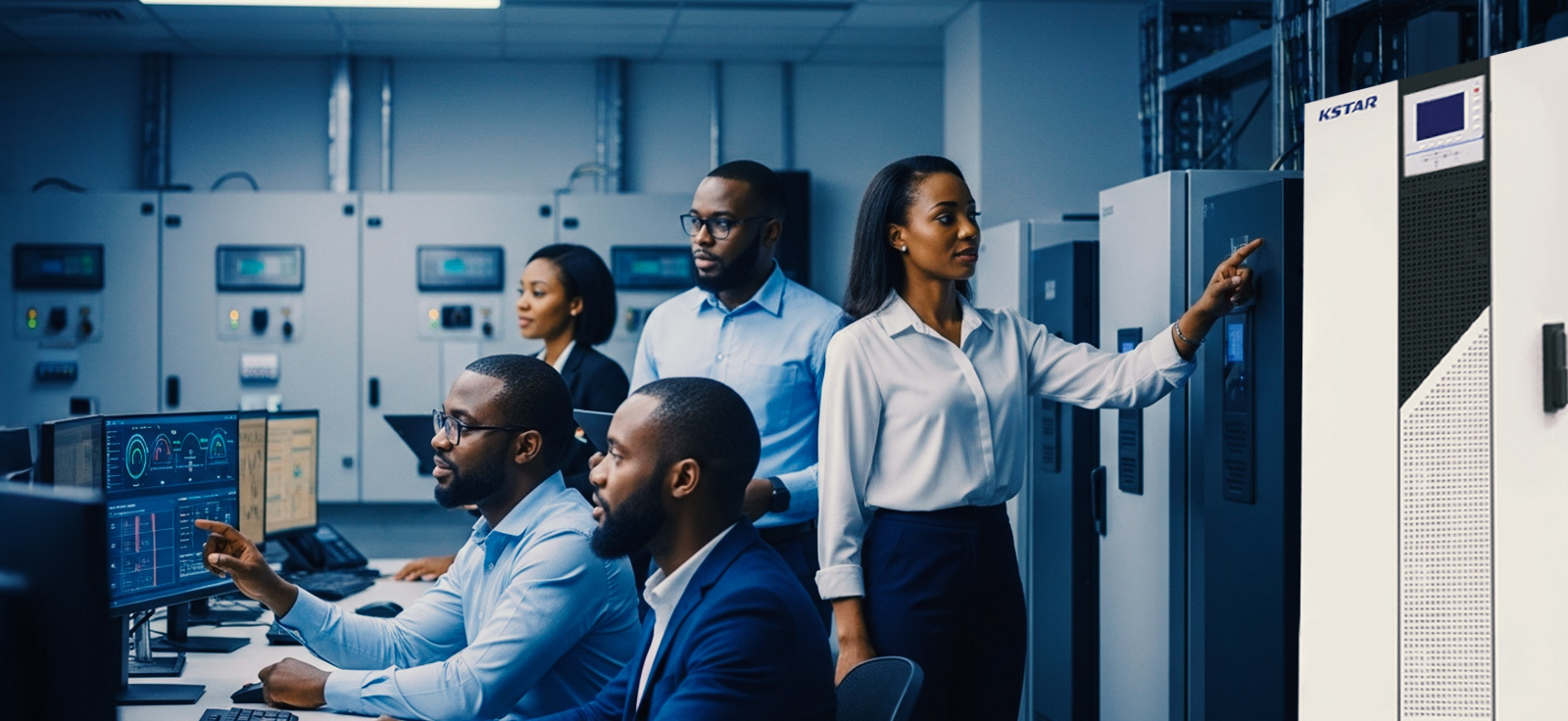
In 2026, the Nigerian industrial sector is no longer just "coping" with power instability; it is actively re-engineering its survival. As the national grid continues to face transmission bottlenecks and fluctuating generation, a new energy landscape has emerged—one defined by decentralized power and high-stakes digitalization.
For Banking, Financial Services, and Insurance (BFIs), as well as healthcare providers, system integrators, and more, "backup power" is no longer a luxury; it is the backbone of operational integrity.
In this new energy landscape, the focus has shifted from simple generators to sophisticated Uninterruptible Power Supply (UPS) systems and long-lasting battery storage. These systems act as the "brains" of a facility, instantly detecting grid failure and transitioning to stored energy without a flicker.
The Role of UPS Systems in Modern Infrastructure
Uninterruptible Power Supply (UPS) systems have become a foundational element of modern energy architecture. UPS systems:
● Provide instant backup power during grid failure
● Protect equipment from voltage spikes and surges
● Prevent data loss, system crashes, and equipment damage
● Support regulatory and operational continuity requirements
For an EPC (Engineering, Procurement, and Construction) firm or a system integrator, the challenge lies in choosing equipment that can withstand the unique environmental and electrical rigors of the Nigerian market. High-performance inverters and lithium-ion storage are now the gold standard for maintaining the 99.9% uptime required by modern Tier III data centers and surgical theaters.
Adapting to the current energy climate requires a disciplined, risk-aware approach to infrastructure. By integrating advanced UPS and solar technologies, Nigerian businesses can transform energy from a systemic risk into a competitive advantage.


